Understanding Tractor Depreciation: A Farmer's Guide to Maximizing Tax Benefits
Understanding tractor depreciation is crucial for the long-term financial health of any farming operation. This guide provides a practical, step-by-step approach to optimizing your depreciation strategy, maximizing tax benefits, and ensuring your farm remains financially resilient. We'll cover various depreciation methods, the importance of accurate tractor categorization, and how to incorporate technological advancements and sustainable practices into your planning.
Did you know that a properly implemented depreciation strategy can significantly impact your farm’s bottom line? Let's explore how.
To understand the initial investment, check out tractor costs.
Depreciation Methods: Choosing the Right Path
Several methods exist for calculating tractor depreciation, each impacting your tax liability and cash flow differently. The optimal choice depends on your farm's unique circumstances and financial goals.
Straight-Line Depreciation: This straightforward method evenly distributes the tractor's cost over its useful life. For a $100,000 tractor with a 10-year lifespan, the annual deduction would be $10,000. While simple, it may not accurately reflect the accelerated depreciation experienced in the early years.
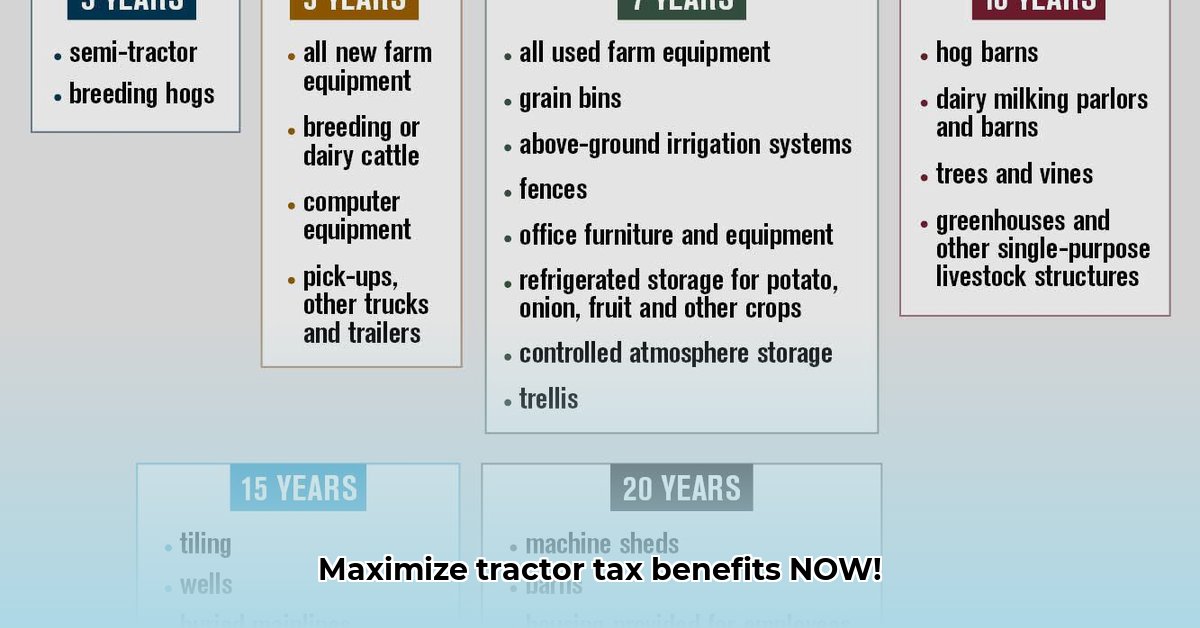
Modified Accelerated Cost Recovery System (MACRS): This IRS-approved method allows for larger deductions in the early years, improving short-term cash flow. MACRS utilizes different depreciation schedules based on the asset's class life (typically 7 years for most tractors). This method requires understanding IRS guidelines and schedules, making professional guidance beneficial.
Declining Balance Depreciation: This accelerated method provides even larger initial deductions than MACRS, particularly beneficial for tractors expected to depreciate rapidly due to technological advancements or heavy use. However, it results in smaller deductions later in the asset's life.
"Choosing the correct depreciation method is critical for optimizing tax benefits," says Dr. Emily Carter, Agricultural Economist at Purdue University. "A thorough understanding of your specific needs and a consultation with a tax professional are key."
A key quantifiable fact: Studies show that utilizing MACRS can reduce tax liability by an average of 15-20% in the first five years compared to straight-line depreciation.
Categorizing Your Tractor: Accuracy is Key to Maximizing Deductions
Proper categorization under MACRS is paramount for accurate depreciation calculations. Incorrect classification can lead to penalties and audit risk. Tractors typically fall into a 7-year recovery period, but specialized equipment might have different class lives. Meticulous research and consultation with a tax professional are recommended. The impact of misclassification can be substantial: an incorrect classification could lead to thousands of dollars in avoidable tax penalties.
Section 179 Expensing: Unlocking Immediate Tax Savings
Section 179 of the Internal Revenue Code allows immediate expensing of certain capital purchases, including some farm equipment. This allows a substantial deduction in the year of purchase, drastically reducing your initial tax burden. However, there are limitations on the amount that can be expensed, requiring careful planning. Always consult with a tax professional to determine eligibility and optimize your deduction.
"Section 179 expensing offers significant tax advantages for farmers," explains Mark Olsen, CPA, at Olsen & Associates. "However, it is crucial to understand the annual limits and coordination with other depreciation methods."
Technological Advancements and Depreciation: Accounting for Obsolescence
Rapid technological advancement affects tractor lifespans and depreciation calculations. To account for obsolescence, consider using a shorter useful life for depreciation or exploring leasing options. Implementing strategies to reflect this rapid pace of change prevents overestimating the asset's remaining value.
Long-Term Planning and Asset Replacement: Integrating Sustainability
A comprehensive asset replacement plan is vital for maintaining financial and environmental sustainability. This strategy requires integrating several factors: life-cycle costs (purchase, fuel, maintenance, repairs, disposal), technological forecasting, and the environmental implications of equipment disposal. Careful planning offers a clear path to sustainable farm management.
Sustainable Practices and Tax Incentives: Aligning Environmental and Financial Goals
Government incentives encourage investment in sustainable agricultural equipment. These incentives can reduce the initial cost of equipment, influencing your depreciation strategy. Strategically utilizing these incentives amplifies the benefits of your depreciation plan.
Record-Keeping: The Cornerstone of Accurate Depreciation and Tax Compliance
Maintain detailed records of all tractor-related expenses, including purchases, maintenance, and repairs. This is essential for accurate depreciation calculations, smooth tax filing, and potential audits. A well-organized record-keeping system is your best defense against potential tax issues.
Conclusion: Charting a Course for Long-Term Financial Success
Proactive depreciation planning is key to the long-term financial health of your farm. This involves understanding different depreciation methods, implementing effective strategies like Section 179 expensing, accurately categorizing your equipment, and accounting for technological advancement and sustainable practices. Remember, seeking professional advice from a tax advisor is always highly recommended to personalize your strategies and maximize your tax benefits.
Resources:
- IRS Publication on Depreciation
- ASABE Resources on Agricultural Engineering